
Tustin City Directory Collections
The documented Tustin city directory material is spread across Orange County references, library leads, federal holdings, and historical collections. Some rows identify a year but not a publisher or shelf. Others identify a publisher and edition but require an in-person check. The coverage table keeps confirmed leads separate from assumptions and shows why a blank year cannot be treated as proof that no directory existed.
| Collection | Years | Where held or cited | Access |
|---|---|---|---|
| Orange County directory including Tustin | 1916 | City of Orange digital collection, OCCGS corroboration | Verify digital or shelf copy |
| Orange County editions | 1926, 1929, 1931 | NARA directory holdings | Collection-level reference |
| Orange County directory runs | 1923-1941; 1945, 1947, 1949-50, 1950 | Historic-resource bibliography | Verify repository |
| Luskey's Orange County Directory | 1951 | Bibliographic citation | Check library or Archives |
| Santa Ana / Central Orange County criss-cross | 1952 | Address-keyed historical lead | In person, repository to verify |
| Luskey's Santa Ana, Tustin, Central OC | 1954, 1956-60, 1961 | Library or Orange County Archives lead | In person |
| East Orange County criss-cross | 1974 | Research citation | Tustin extent unstated |
The years are useful starting points, not a promise that every Tustin address appears in every volume. A directory may cover a larger Orange County area, use a business boundary, omit a small road, or list only subscribers. Confirm the title page, publisher, geographic scope, and reverse-section key before drawing a household conclusion.
Luskey's Tustin Directory Years
Luskey's editions form the clearest named publisher trail for mid-century Tustin city directory research. The research identifies a 1951 Orange County volume, then Santa Ana, Tustin, and Central Orange County editions in 1954, 1956 through 1960, and 1961. A 1952 Santa Ana and Central Orange County criss-cross sits beside that run. The exact shelf location is not published for each edition, so call the Tustin Library Local History Collection and ask the Orange County Archives before relying on a single catalog record.
Use the title page and abbreviation key first. Then capture the name, address, spouse or widow notation, occupation mark, and any reverse address entry. Compare the same surname across adjacent editions rather than reading one year as a complete census. A moved household may disappear from one volume and appear under an abbreviated street, changed number, or neighboring community label.
NARA's city-directory holdings page supplies a defensible federal reference for the 1926, 1929, and 1931 Orange County leads.
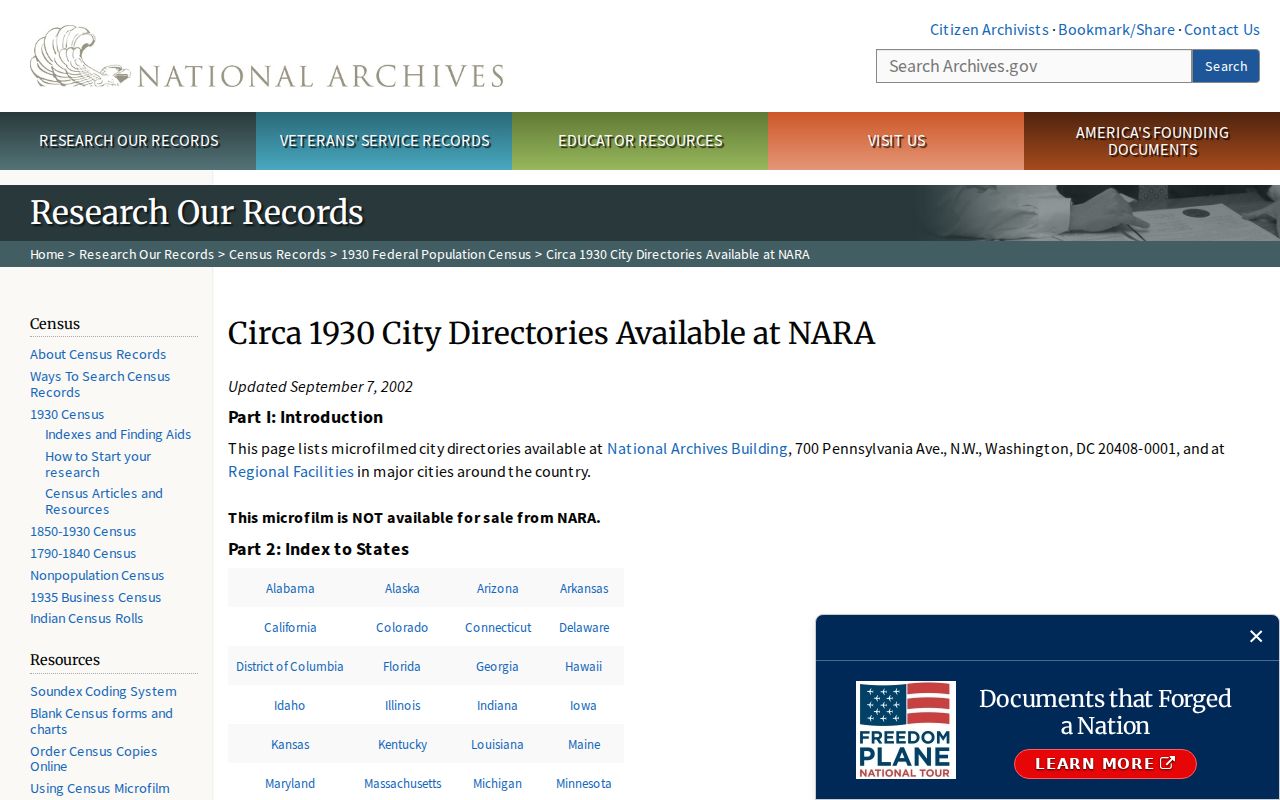
The federal page is a collection guide, not an open scan of a Tustin individual entry.
Read a Tustin Directory Entry
A Tustin city directory entry compresses several clues into a small line of print. A surname and given name identify the listing. A residence address locates the household. A spouse or widow mark can connect two names. Occupation notation describes the directory's classification at that time. The reverse section changes the search direction from name to address. A business line may point to an owner or operator living elsewhere, so read the residential and business sections separately.
The research includes an Orange County example in which an index or OCR form changed Kate Aultz to Kate Autlz. That quirk is a reminder to browse the page image and try letter transpositions, spacing, hyphenation, and former street names. The example establishes Orange County reading mechanics, not a claim about a specific Tustin household.
| Entry clue | What to record |
|---|---|
| Name line | Surname, given name, initials, spelling variants. |
| Residence | Street, number, unit or locality as printed. |
| Household mark | Spouse, widow, or related-name notation when present. |
| Occupation notation | The classification printed by that edition, not a current fact. |
| Reverse section | Address-to-name clue and nearby listed entries. |
- Criss-cross
- An address-keyed directory that reverses the usual name-first order.
- Abbreviation key
- The publisher's guide to short forms, marks, and symbols.
- Index
- A pointer to a name or record, not necessarily an image or complete file.
Tustin Reverse Directory Pages
Reverse pages are the best city directory tool when the starting fact is a house or street. Begin with the address as printed in the target year. Check the reverse entry, then turn to the alphabetical listing for the same name. Record every neighbor listed nearby, but keep the result tied to the edition date. An address can have a business listing, a household listing, or both. A blank reverse result can reflect coverage, subscriber choice, OCR, or a changed street name.
- Write the modern address and its APN, then find the historic street name or number if the property changed.
- Open the reverse or criss-cross section for the closest documented year and copy the printed form exactly.
- Check the alphabetical name section for spouse, widow, address, and classification marks.
- Compare the next available edition and the matching census year, noting moves and omissions.
- Use the Tustin News, obituary index, deed chain, or Archives to test the household clue.
The Tustin city directory therefore works as a time slice. It can show who a publisher listed at an address, not every person who slept there or every person who later occupied it.
Tustin Library History Shelf
The Tustin Library Local History Collection is the first local call for city directory research. The branch is at 345 E Main Street, with the researched phone number 714-544-7725 and email ocpl.tustin@occr.ocgov.com. Published hours are Sunday 9 a.m. to 5 p.m., Monday through Thursday 10 a.m. to 7 p.m., and Friday and Saturday 9 a.m. to 5 p.m. The public page does not publish an exhaustive year-by-year directory shelf list, so ask staff about Orange County, Luskey, reverse, and old phone-book runs before traveling.
The library is also a bridge to local newspaper and family material. Its Memory Lab can digitize photos, film, VHS or MiniDV, audio, and floppy disks in reserved three-hour sessions. That personal material may hold an address clue that never entered a public index. Preserve the original label and date, then compare names with a directory or newspaper rather than treating a family caption as a formal record.
The Tustin Library local-history page gives the branch contact and hours.
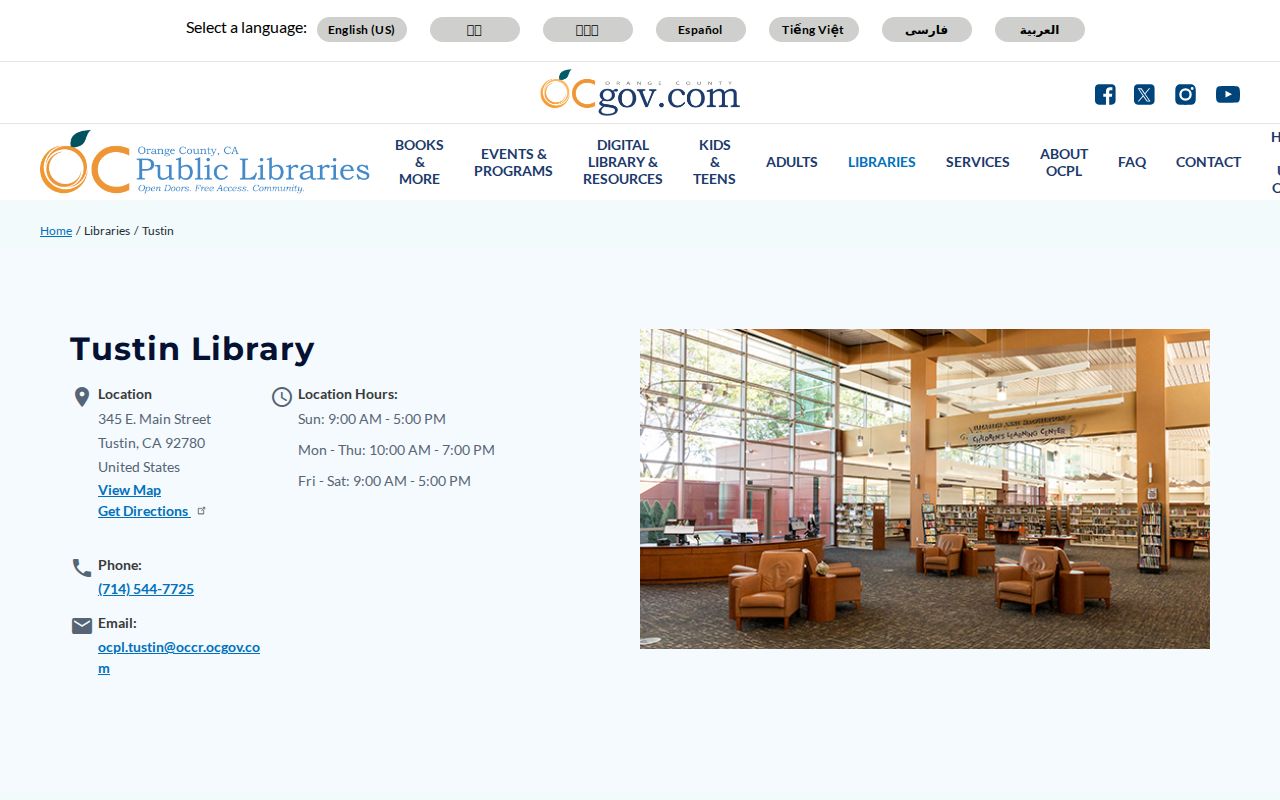
The library is the honest first stop because the public web does not expose a complete Tustin directory shelf list.
Tustin Archives and Maps
Orange County Archives at 211 W Santa Ana Boulevard, Room 108, holds historical county property, vital, government, directory, newspaper, and image material. The researched collection is strongest for older county records, with most holdings predating 1960. The January 1895 Tustin Sanborn sheet at the Library of Congress adds building footprint and use context. It is a map of place, not an occupant register. The Tustin Historic Resources Survey and StoryMap maps selected property dossiers through 1976 and can supply a second historical layer.
Do not turn a map or survey absence into a negative finding. The research says the survey scope excluded Tustin Ranch and Tustin Legacy specific-plan areas. A property outside that scope may still have a rich deed, newspaper, or directory history. Use the map to orient the address, then return to the directory year, legal description, and archive record.
Tustin's official history page provides local settlement and development context for reading old directories.

Historical context helps explain why the same address can appear under a different street or tract description.
Tustin News Fills Missing Years
The Tustin News is a powerful companion to the historical shelf because its digitized run spans November 16, 1922 through December 28, 2000. The research counts 2,350 issues and 44,955 pages. Search names, street names, school events, civic notices, businesses, obituaries, and legal notices around the directory year. A notice can establish that a person or household was mentioned in a time and place even when the directory shelf has a gap.
OCR needs care. The documented Orange County example changed Aultz to Autlz, so search swapped letters and browse the page image. Try old street names, initials, compound surnames, Spanish and Asian name-order variants, and both business and residential terms. Keep the clipping date and page number with the lead. A newspaper mention is corroboration, not proof of a present address.
Tustin's historical society resource page describes the museum terminal, Tustin News research, and yearbook digitization.
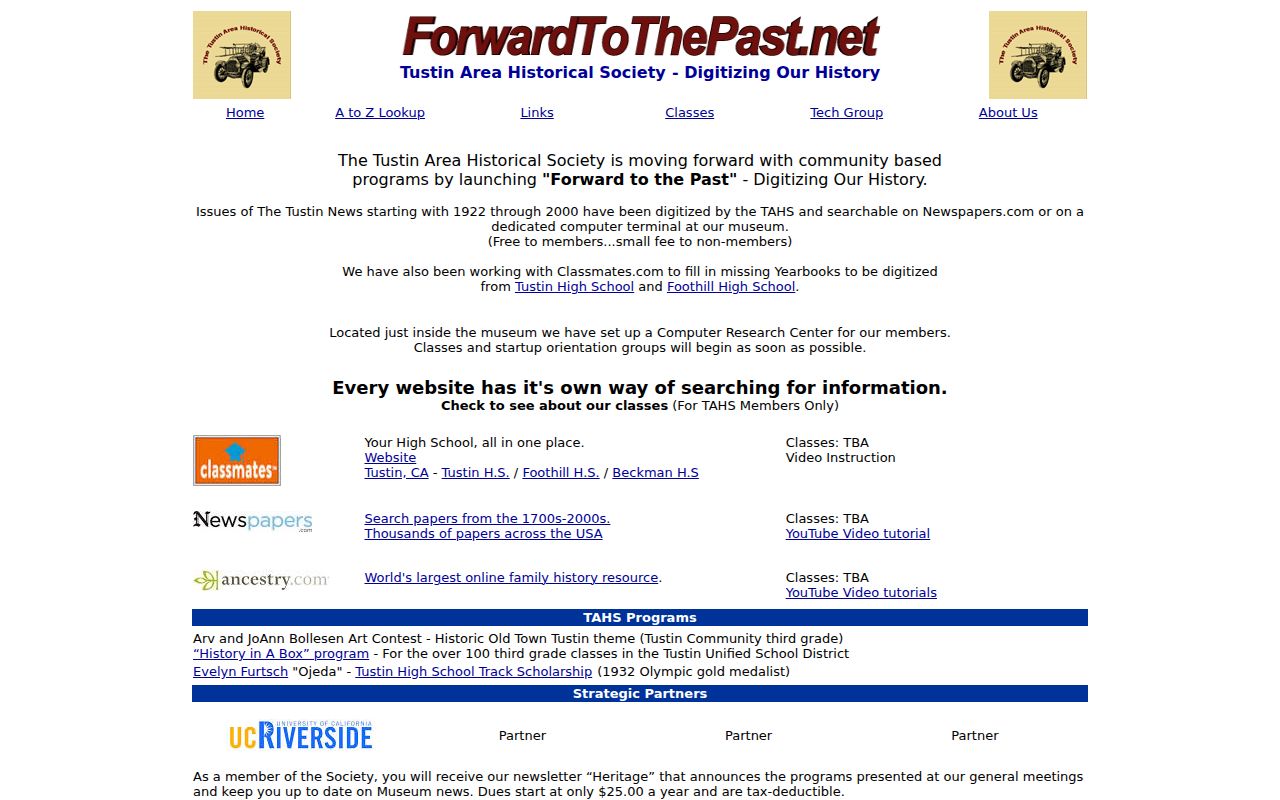
The museum terminal supplies a local research path when a public directory scan is unavailable.
Trace Tustin Households Across Years
Family-history work is strongest when each directory year is paired with a second dated source. A 1926, 1929, or 1931 directory can be read beside the 1930 census. A later directory can be paired with the 1940 census, a newspaper notice, a deed, or an obituary. The point is not to create a smooth story from gaps. The point is to identify which source actually supports each move, relationship, or address.
For a surname search, preserve the printed spelling, then try OCR variants and initials. For an address search, use the reverse section, then test the name in the alphabetical section. Compare adjacent entries and nearby streets. A widow mark, changed occupation notation, or new address may signal a household transition, but it does not identify every relative. The Tustin library, Archives, and museum are the places to resolve a volume question.
When a historical find needs a current confirmation, the separate Tustin resident lookup workflow should handle the one-person question. For present parcel records, the Tustin street directory keeps the modern address layer separate from the historical shelf.
Why Tustin Directory Runs Scatter
No official source located a continuous, open Tustin city directory scan or a complete year-by-year shelf list. The documented material is mostly county-wide, scattered across bibliographies, federal holdings, the library, the Archives, and local historical work. That is a research fact, not a reason to fill the gap with a generic claim. A careful request names the publisher, edition year, geographic scope, reverse section, and desired address or surname.
Tustin's local history also creates breaks. The city incorporated in 1927, Orange County dates from 1889, and the 1968 street renaming changed several familiar names. Postwar growth and Tustin Legacy created new tract and planning layers. Those shifts mean a directory can be read accurately only when its date, publisher, geography, and address language are recorded together.
Research tip. Ask the repository to verify the exact volume before assuming a cited Orange County year contains every Tustin street or every household.